how to create an AI Chatbot in 2025.
Artificial Intelligence (AI) chatbots have evolved from being merely exploratory tools to becoming indispensable digital assistants in a variety of sectors. By 2025, chatbots will be providing customer support in e-commerce, dealing with patient questions in the field of healthcare, helping students through education as well as increasing sales in the digital realm of marketing. Chatbots provide real-time chats with 24/7 support and automated processes that are cost-effective and businesses should not be able to afford to ignore. The best part is that the creation of an own AI chatbot has been made more simple than ever before, due to the advent of no-code platforms, open source frameworks and advanced large-language model (LLMs).
This guide will take you step-by-step through the process of building the perfect AI chatbot. From defining the purpose of the chatbot to selecting the best tools, and making sure it’s constantly improving as time passes, you’ll discover every detail you’ll need in order to create a chatbot that’s intuitive and useful. It also feels human-like.
What is an AI Chatbot?
A AI chatbot is a computer application that makes use of natural processing of language (NLP) along with machine learning (ML) to communicate with users in a more conversational manner. Contrary to earlier robots, which depended on predefined commands as well as scripted responses, AI chatbots can understand the motivation behind questions from users and adapt to various conversations, and offer responses that are more natural. They also grow in time as they gain experience from conversations.
You are probably familiar with sophisticated AI chatbots, such as ChatGPT, Google Bard, and Microsoft Copilot. These tools demonstrate the power of chatbots that use AI and set the bar high for what modern chatbots can provide: speed, accuracy and even a hint of human-like character.
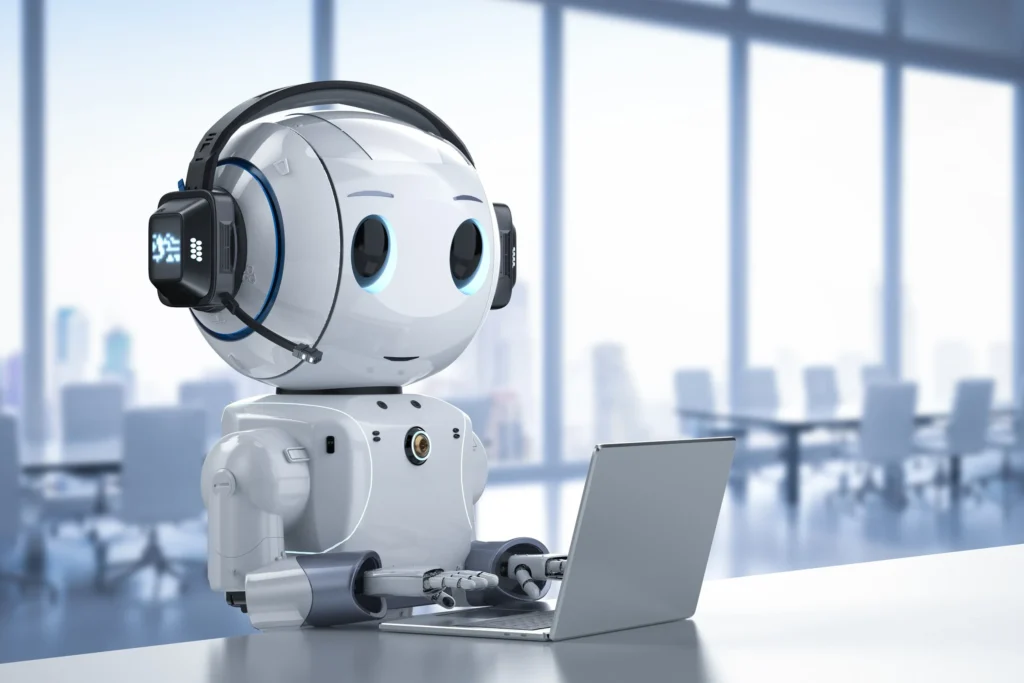
steps to Create Al chatbot
The steps to create an AI Chatbot are as following:
1. Define Your Chatbot’s Purpose
The first step to create chatbots is to establish the purpose of the chatbot in a clear manner. Find out what it will be used for in the future, what kind of tasks it must perform, and the tone of conversation it should employ. For instance, if build a chatbot to support the online shop, you might have to respond to inquiries about payments, orders, and returns. A travel company might require an assistant for booking that could provide prices for tickets and information about reservations. A platform for education might use chatbots as virtual tutor who can answer questions from students.
Being clear at this point will help guide the remainder of your development. Without a clear goal it is possible to create chatbots that try to do too much, but does not meet the expectations of users.
2.Choose the Right Platform
There are two primary methods to create chatbots: no-code platforms or custom development. No-code platforms are perfect for novices because they employ drag-and-drop interfaces that do not require programming. Tools such as Tidio, Landbot, ManyChat and BotPress allow you to build and deploy a chatbot in a matter of hours.
If you’re looking for more control, frameworks such as Rasa, LangChain, and Microsoft Bot Framework provide deeper personalization. These frameworks are user-friendly and allow you to incorporate advanced AI capabilities as well as connect to APIs and even refine the models you create. The choice you make will be based on your technical capabilities as well as your resources and objectives.
3.Select the AI Engine
Its AI engine acts as your chatbot’s “brain” for your chatbot, which is responsible to comprehending questions and coming up with answers. Some of the most popular options are openAI’s GPT model, Google Dialogflow, Amazon Lex, Rasa, and Microsoft Bot Framework. If you’re looking for an artificial-human chatbot that can respond in a human way GPT-based APIs are excellent choice. If you’re looking for the integration of multiple channels and scalability, Dialogflow as well as Amazon Lex may be more appropriate. For companies that require complete control and flexibility, Rasa is a popular open-source framework.
Selecting the best AI engine will ensure that your chatbot will interpret natural language, detect intentions, and effectively respond to different situations.
4.Design the Conversation Flow
Once you’ve decided on your AI platform and platform The following step will be to create the way that the chatbot will interact with users. A great conversation flow will include friendly greetings, helpful prompts as well as clear fallback messages for instances where the bot does not know what it is that you are trying to convey. For example, a chatbot might start by saying, “Hi! What can I do to help your today?” It can then give suggestions like “Track my order,”” “Report an issue,” as well as “Speak with the agent.”
If the chatbot isn’t sure of its capabilities, it should not annoy users with frequent errors. Instead, it should be polite and acknowledge, “I didn’t quite understand this. Would you like me to connect you with a human customer service representative?” Well-designed conversation flows allow for smooth interactions and keep users from quitting the chat.
5.Train Your Chatbot
AI chatbots require training in order for them to perform effectively. For rules-based bots it is usually a matter of uploading FAQs as well as triggers that are keyword-based. For advanced bots training involves feeding them actual conversational data, resolving mistakes and increasing their accuracy over time.
For instance, a chatbot created for an airline must be educated with details about cancellation policies, ticket booking as well as flight schedules and baggage regulations. The more accurate and reliable data you supply the more your chatbot is able to comprehend the user’s intentions and give appropriate responses. Expert users are able to fine tune large-language models that are open-source, such as LLaMA, Mistral, or Falcon with data specific to your company to build chatbots that are domain-specific.
6.Integrate with Your Website or App
Once your chatbot has been educated, it should be made available to users who are able to access it. The most popular method is to embed it as an element on your website. You can also incorporate the chatbot into your mobile application to provide support on the go. Numerous companies use chatbots on messaging platforms like WhatsApp, Facebook Messenger, Telegram, Slack, or Discord to connect with customers directly.
Integration should be seamless. If people aren’t able to locate or access your chatbot, they’ll not benefit from it. The more easily accessible it can be, the better efficient it will be.
7.Test Before Launch
Before you make your chatbot public It is crucial to verify it thoroughly. Examine whether it can answer questions with accuracy, responds swiftly and offers a seamless user experience. Test in various scenarios, such as several users talking simultaneously, to ensure that it is scalable.
Testing the beta version with a small group of users is among the most effective ways to discover any flaws you’ve missed. The feedback they provide will aid in the refinement of your chatbot prior to launching it fully.
8.Monitor and Improve Continuously
Chatbots are not an instant project. Once it is live, it needs to be continuously monitored and improved. Monitor key metrics such as success rates, satisfaction with the service and dropout rates. Update your knowledge base by adding new FAQs as the customer’s requirements change. In time, you may also incorporate personalization features to ensure that the chatbot can remember user preferences and customizes its responses.
Chatbots that change with user behaviour remain useful and efficient, whereas slow-moving bots rapidly become useless.
Features of a Great AI Chatbot
Not all chatbots are in the same way. The top ones have common features like natural language processing to understand the intent of the user, personalization to make conversations more personal and seamless availability across all platforms, and integration with tools such as CRM as well as payment system, as well as analytics dashboards that provide information about business. If your chatbot has the ability to combine these functions and more, it will be different from other chatbots and offer real value.
Popular Tools for Building AI Chatbots
A variety of tools will dominate the chatbot development market by 2025. Dialogflow is one of them. It’s easiest to use and it integrates perfectly and seamlessly with Google services. Rasa is extremely flexible and open-source, which makes it the ideal choice for developers. BotPress is another option that caters to developers with modular functions. For online sales, Tidio is a strong choice, whereas ManyChat is popular to automatize social media. Developers who are developing advanced assistants can explore LangChain together with the open source LLMs.
SEO Tips for Your Chatbot Blog
If you’re writing about chatbots on your personal site, be aware that SEO is crucial. Utilize keywords such as “how to make an AI chatbot,”” “easy chatbot tutorial,” or “best chatbot software in the year 2025” in your headlines and text. Include FAQs such as “Can I develop chatbots without programming?” or “How much will it cost to develop chatbots?” since these often are listed within the Google’s “People Are Also Asking” section. Be sure to include the meta description of your website with the keywords you’re targeting for example: “Learn how to create an AI chatbot in 2025 by following this step-by-step instruction. Learn about platforms, tools and strategies for creating intelligent chatbots .”
Conclusion
The process of creating an AI chatbot for 2025 is simpler and easier than ever. With platforms that do not require code for beginners, and robust frameworks that allow developers to make an AI chatbot that will provide an actual benefit. The process starts by having a clear idea of what you want to achieve and then selecting the best technology along with an AI engine, establishing chat flows, and then developing your bot using top-quality data. After the bot is launched, constant monitoring and improvements ensure that your chatbot’s relevance and valuable.
If you do it right the chatbot you choose to use can not only answer your questions, but also build your brand image, improve customer satisfaction, and help save your business money and time. In today’s highly-connected digital world it is clear that an AI chatbot isn’t just a choice -it’s a requirement.