How AI Is Changing the Rules of Social Media Reach
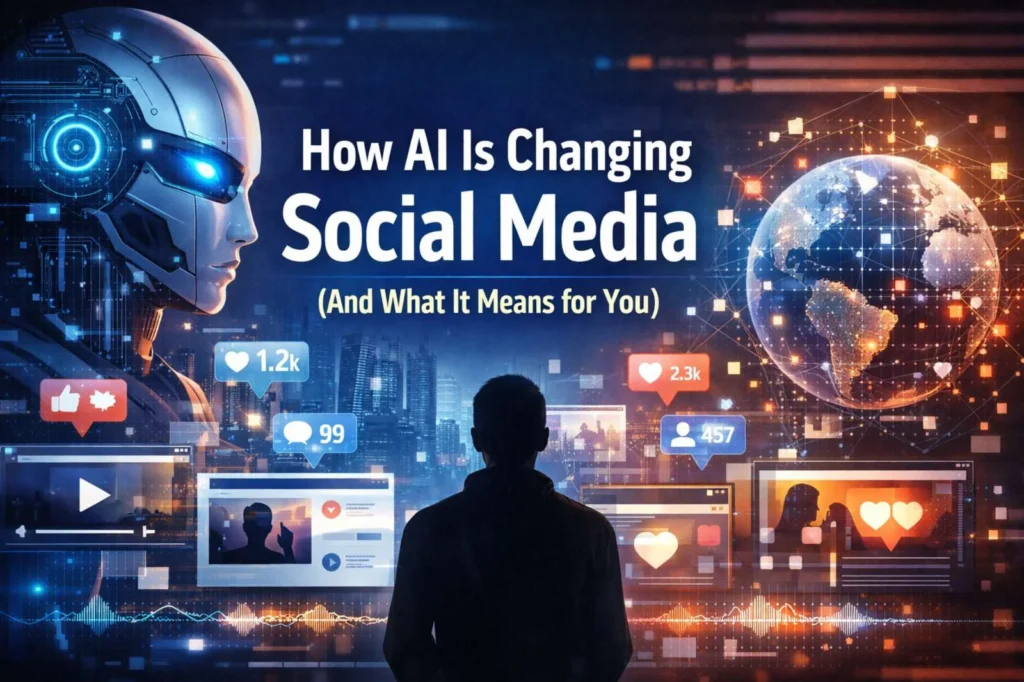
How AI Is Changing the Rules of Social Media Reach For years, growing your reach on social media was simple in theory: post consistently, use the right hashtags, and build a loyal following. That playbook doesn’t work anymore. In 2026, artificial intelligence sits at the center of every major platform, deciding what gets seen, by whom, and why and it has completely rewritten the rules of reach.
From Follower Count to Relevance
How AI Is Changing the Rules of Social Media Reach The biggest shift is that reach is no longer tied to how many followers you have. <cite index=”5-1,5-2″>AI now powers the majority of content recommendations users see across social platforms, and algorithms rather than personal connections determine most of what people encounter in their feeds. </cite> Platforms have moved away from simply showing content from accounts people follow and instead act more like recommendation engines, surfacing whatever content is predicted to hold someone’s attention, regardless of whether they follow the creator.
This means a small account with genuinely engaging content can now outperform a large one with a bigger following but weaker engagement.The direction across platforms is consistent: relevance over reach.
Recency No Longer Rules the Feed
How AI Is Changing the Rules of Social Media Reach Another major change is how platforms treat timing. AI-driven feeds now prioritize what is relevant to each individual user rather than simply what was posted most recently, so a post from a few days ago can outperform something posted hours ago if the algorithm judges it more relevant to that specific viewer. For creators and brands, this means chasing “peak posting times” matters far less than what matters: whether the content itself earns strong engagement once it’s shown.
What AI Actually Measures
How AI Is Changing the Rules of Social Media Reach Modern algorithms don’t just count likes anymore. They study a wide range of behavioral signals to predict what will keep someone engaged. Saves and shares have overtaken likes as the strongest ranking signal, and video content now generates significantly more engagement than other formats.
On top of that, platforms track watch time, clicks, saves, and even how long someone pauses on a piece of content to predict what’s worth showing more of.
Different platforms are also tuning their AI for different goals:
- Instagram leans heavily on visual analysis; its algorithm now examines images, videos, captions, background audio, facial expressions, and text overlays to understand and rank content. </cite>
- LinkedIn has shifted toward evaluating substance over virality; its algorithm now weighs expertise, credibility, and industry relevance rather than rewarding purely viral behavior. </cite> <cite index=”4-1″>It also factors in content quality, professional tone, and total view count, while penalizing spam-like behavior such as excessive hashtags or posting too frequently. </cite>
- Facebook has moved toward rewarding depth of interaction; <cite index=”9-3″>its AI now focuses on meaningful interactions and community engagement, evaluating things like comment depth and conversation quality rather than just broadcast reach. </cite>
Organic Reach Is Shrinking
The numbers make the shift clear. Instagram’s organic reach has fallen to just 5–7.6% of a creator’s followers, while TikTok’s engagement rate has climbed 49% year-over-year to 3.70%. Fewer people are seeing your posts simply because they follow you, but the ones who do see it are increasingly engaging because the algorithm believes it’s genuinely relevant to them.
Why This Matters for Brands and Creators
How AI Is Changing the Rules of Social Media Reach The takeaway isn’t that reach has become impossible; it’s that it now has to be earned differently. Businesses can no longer rely on posting frequently and using trending hashtags; content has to be something AI identifies as valuable, relevant, and genuinely engaging. The good news is that this actually levels the playing field: high-quality, niche content can now outperform larger accounts purely through relevance, rather than needing a massive following to get noticed.
At the same time, AI is reshaping how content gets made, not just how it’s ranked. <cite index=”5-4″>A large majority of marketers say generative AI tools now help them produce significantly more content than they could manage without it, and most social media marketers have already built AI tools into their day-to-day workflow. But the brands seeing the best results aren’t using AI to replace creative thinking; they’re using it to remove production bottlenecks so more genuinely engaging content can get made faster.
How to Adapt Your Strategy
- Prioritize watch time and saves over vanity metrics. Content that keeps people watching or worth bookmarking is what algorithms now reward most.
- Lean into video and interactive formats. Short-form video, carousels, and interactive posts are being actively pushed by most platforms’ algorithms.
- Focus on niche relevance over broad appeal. Speaking directly to a specific audience often earns more algorithmic trust than trying to please everyone.
- Use AI tools to scale production, not replace originality. Let AI handle repetitive production work while keeping the creative voice human.
- Build for community, not just broadcast. Platforms increasingly reward genuine conversation and interaction over one-way announcements.
Final Thoughts
How AI Is Changing the Rules of Social Media Reach Social media reach in 2026 is no longer a numbers game built around follower counts and posting frequency. It’s an AI-driven relevance game where the quality, format, and genuine engagement value of your content matter far more than how many people are already following you. Brands and creators who understand what AI is actually optimizing for and adapt their strategy accordingly are the ones who’ll keep growing while others watch their reach quietly decline.