best 5 Benefits of Interoperability in Healthcare
Interoperability in healthcare is the ability of healthcare systems, devices, applications and platforms to communicate and exchange information seamlessly. With the rapid development of technology for digital health making interoperability an important objective for healthcare organizations around the world. Interoperability makes sure that healthcare professionals as well as patients and other others can communicate information across multiple platforms which leads to more efficient outcomes, better efficiency and better patient experiences.
What is interoperability in healthcare?
You might be questioning yourself at this point: What does the term interoperability mean in healthcare? Interoperability in healthcare means the ability of healthcare information systems to interpret and share patient data, such as patients’ medical histories, vital signs, past treatments, etc.
The next thing to understand is interoperability isn’t just within different departments of the same organization. It can also involve sharing patient information among different hospitals, clinics, pharmacies, and laboratories.
Benefits of interoperability in healthcare ensures that every healthcare provider has easy access to complete patient information to deliver high-quality care on time.
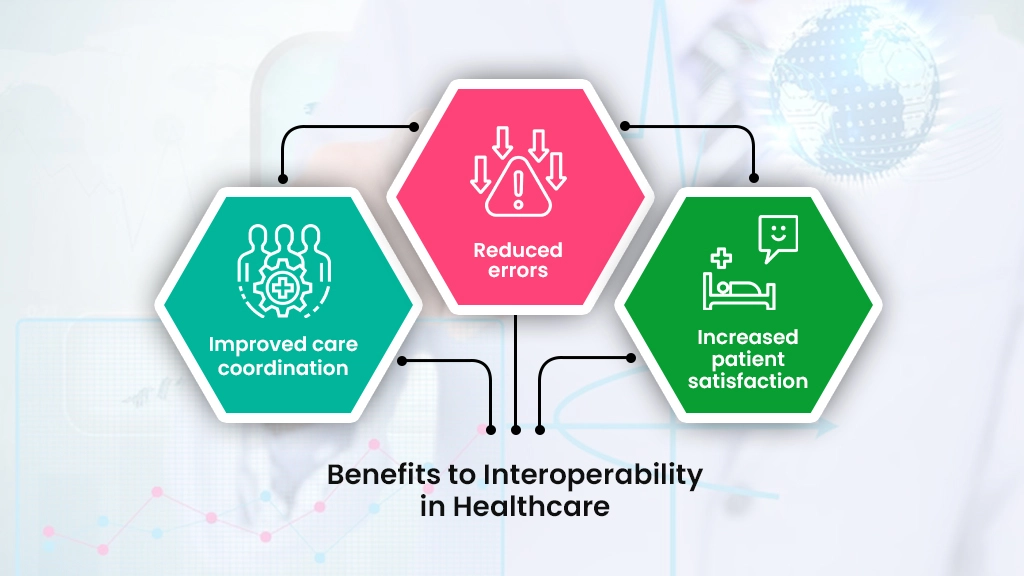
5 benefits of interoperability in healthcare
In this article, we’ll examine the top 5 benefits of interoperability in healthcare. with a focus on how it improves the patient experience, speeds up processes and boosts the entire healthcare system.
1. Improved patient care and Safety
One of the major benefits of interoperability in healthcare industry is the enhancement of the safety and care of patients. Interoperability lets healthcare professionals access patient information from a variety of sources, such as electronic health records (EHRs) as well as laboratory results such as diagnostic images, medical history. This comprehensive perspective of a patient’s health allows for more precise diagnoses as well as better-informed treatment decisions and individualized treatment plans.
- Quicker Emergency response in emergency situations access to the medical history of a patient, including any previous procedures, allergies, as well as chronic ailments, can be vital. With interoperable healthcare systems healthcare professionals can swiftly access vital information to provide quicker and more efficient treatment.
- Reduced medication errors If multiple healthcare systems communicate information, the chance of errors with medication is reduced. For instance, if the patient sees an unfamiliar healthcare provider or visits an hospital, their medication record is available immediately, ensuring that the healthcare provider is aware of the current prescriptions of the patient as well as allergies and interactions with drugs.
2.Streamlined Workflow Efficiency and Operations
Interoperability streamlines administrative processes and speeds up workflow within healthcare environments. It reduces the need for duplicate data entry, and also reduces the need for the need for manual documentation, resulting in more efficient processes. Healthcare professionals do not need to search for patient data in several systems or waiting for faxed records. Instead real-time data sharing enhances the communication between various departments and healthcare providers.
- Reduced Administrative burden By automating data sharing administration tasks like filling out forms for patients as well as updating records and the management of billing is made easier. Healthcare professionals can concentrate on the patient’s care and less lengthy administrative tasks.
- Speedier Information Sharing Interoperable systems facilitate data sharing between labs, hospitals pharmacies, hospitals and other healthcare institutions in real-time. This accelerates processes, decreases bottlenecks and speeds up decision-making.
3.Save Costs to Healthcare Professionals
Interoperability can result in significant savings for healthcare providers through reducing inefficiencies, duplicate efforts and administrative costs. The streamlined workflows and sharing of data eliminate the need for duplicate tests, diagnoses and procedures that can be expensive for both the health care providers as well as patients. Furthermore, interoperability allows for efficient resource management, enhancing patient flow and decreasing waiting times.
- Lower Administrative Costs The automation of data exchange as well as removing paper-based processes decreases the requirement to manually enter data, store it and retrieval, resulting in less administrative expenses.
- Reduced testing Interoperability permits healthcare professionals to get access to the results of tests and medical records from other healthcare providers, removing the requirement for repeat test or diagnosis procedures. This is not just a cost-saving measure but also eases the burden on patients.
4. Enhanced Empowerment and Engagement of Patients
Benefits of Interoperability allows patients to take greater control over their health by making their medical information easier to access. Patients are able to easily access their health information through web-based portals and apps which allow them to keep track of their health status, review test results and be updated on the treatment plan they have. This empowers patients and helps them take an active part in managing their health.
- Better Communication Interoperable systems enable improved communication between healthcare providers and patients. Patients can make messages to request appointments, make requests, and request answers directly from their health portals online improving the overall healthcare experience.
- Quick accessibility to healthcare Information Patients are able to get access to their entire information about their medical condition, medications and test results on interoperable health platforms, leading to better-informed decision-making and a better management of chronic illnesses.
5. Better Population Health Management and Research
Interoperability is vital to improve the management of health issues in populations and facilitating medical research. Through connecting health information from different sources, healthcare organisations can analyse trends, track outbreaks of diseases and recognize risk factors for specific groups. This method of data-driven analysis will result in more effective public health interventions and initiatives which result in better health outcomes on a local scale.
- Assistance in Medical Research: Interoperable systems can also enhance medical research by giving researchers access to vast, varied data sets. These databases can be used to discover new treatment options, research the development of disease, and to improve clinical trial design.
- data-driven decision making Interoperable technology allows health professionals to analyse the data gathered from various sources, and identify patterns and health risks that could be present. This data could be utilized to design specific health awareness campaigns and early intervention programs and more efficient treatment options.
Conclusion
Benefits of Interoperability in healthcare is a requirement for enhancing the quality of care for patients, reducing costs and streamlining the process. Through facilitating seamless data exchange across multiple platforms and systems interoperability allows healthcare providers to make better decisions, eases administrative burdens and improves the overall experience for patients. As healthcare continues to develop and evolve, interoperability will play an crucial role in driving innovation that enhance outcomes and build an efficient, patient-centered healthcare system. It doesn’t matter if it’s increasing safety, improving treatment of chronic diseases or assisting in research in medicine, the advantages of interoperability in healthcare are obvious. And the importance of it will only increase as the healthcare digital ecosystem grows.