GEO and AEO
If you’ve been following digital marketing trends in 2026, you’ve probably come across two new acronyms: GEO and AEO. Both are reshaping how businesses think about online visibility, but they are not the same thing, and confusing them can cost you traffic.
This guide explains exactly what each term means, how they differ from traditional SEO, and practical steps to optimize for both.
What Is GEO (Generative Engine Optimization)?
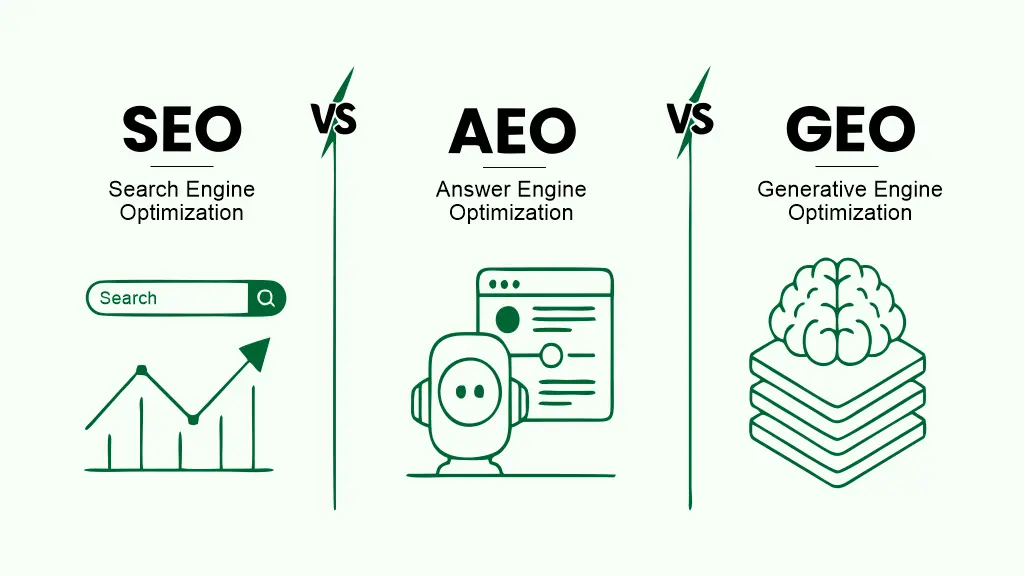
GEO refers to optimizing your content so it gets referenced, summarized, or cited by generative AI tools like ChatGPT, Gemini, Perplexity, and Google’s AI Overviews. Unlike traditional search, these tools generate a synthesized answer rather than a list of links, so your goal shifts from “rank #1” to “get mentioned inside the answer.”
What Is AEO (Answer Engine Optimization)?
AEO focuses specifically on structuring content to directly answer questions, often for voice assistants, featured snippets, and quick-answer boxes. AEO existed before generative AI became mainstream, but it now overlaps heavily with GEO because both prioritize clear, direct answers.
Key Differences Between GEO and AEO
| Aspect | GEO | AEO |
|---|---|---|
| Target platforms | ChatGPT, Gemini, Perplexity, AI Overviews | Voice assistants, snippets, quick answers |
| Content goal | Get cited/summarized | Get selected as the direct answer |
| Format focus | Depth, authority, structured data | Brevity, precision, schema markup |
| Success metric | Brand mentions, citations | Snippet wins, voice search appearances |
Why Your Business Needs Both
Most businesses can’t afford to optimize for only one. A user might ask ChatGPT a question (GEO) and get a summarized answer citing three websites, while another user asks Google Assistant the same question and gets read a single snippet (AEO). Covering both increases your total visibility across every search surface.
Practical Steps to Optimize for GEO
- Write in a citeable format – short paragraphs, clear statements, and named facts are easier for AI models to extract and attribute.
- Include original data or expert insight – generative engines favor content with unique value, not rehashed information.
- Maintain consistent brand mentions across the web – GEO relies partly on how often and how consistently your brand appears across trusted sources.
- Publish on topics with clear authority – depth beats breadth; own a niche fully rather than spreading thin.
Conclusion
GEO and AEO are not competing strategies, they are complementary pieces of a modern visibility puzzle. Businesses that structure their content for both traditional answer boxes and generative AI summaries will capture attention across every stage of the search journey. If you want a content strategy built specifically around GEO and AEO principles, our team can help audit and restructure your website accordingly.